



HTA & Diabetes
Displaying items by tag: Chronic Kidney Disease
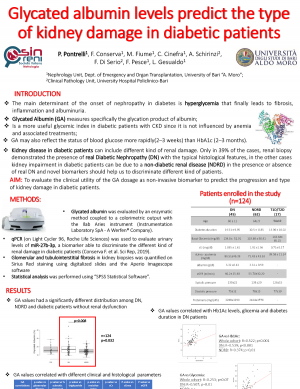
POSTER Euromedlab/WorldLab 2023: Glycated albumin levels predict the type of kidney damage in diabetic patients
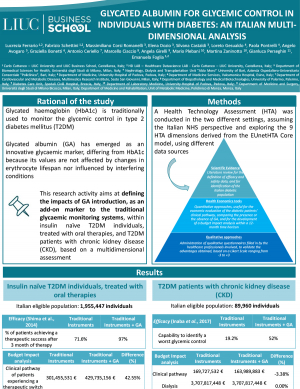
POSTER Euromedlab/Worldlab 2023 - Rome: GLYCATED ALBUMIN FOR GLYCEMIC CONTROL IN INDIVIDUALS WITH DIABETES: AN ITALIAN MULTI-DIMENSIONAL ANALYSIS
Glycated Albumin and Health Technology Assessment: multidimensional analysis of a new marker for monitoring blood glucose in diabetic patients with renal complications
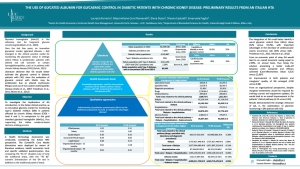
Poster ISPOR 2021: The use of Glycated Albumin for glycaemic control in diabetic patients with chronic kidney disease: preliminary results from an italian HTA
The Management of Patients with Diabetes and Advanced CKD: Glycated Albumin as Possible Marker

Diabetes and chronic kidney disease are often associated. In patients with stage 3 CKD or higher, HbA1c has shown some limitations. In these circumstances, Glycated Albumin (GA) has been found to be more reliable, particularly in haemodialysis patients, and useful for evaluating short-term treatment efficacy.
The clinical usefulness of glycated albumin in patients with diabetes and chronic kidney disease: Progress and challenges

In patients with diabetes and chronic kidney disease, GA is a better index of glycaemic control than HbA1c because it is not affected by the half-life of red blood cells, iron concentrations and/or erythropoietin therapy, uraemia, etc. As well as indicating the mean plasma glucose concentration, GA also reflects postprandial plasma glucose and glycaemic excursions, which are closely associated with diabetic complications such as cardiovascular disease.