



HTA & Diabetes
Displaying items by tag: diabetes mellitus
Glycated Albumin may be a Possible Alternative to Hemoglobin A1c in Diabetic Patients with Anemia
HbA1c was underestimated in diabetic patients with anemia than in those without anemia, with the degree of underestimation increasing as glycemic control became poorer. GA may more accurately assess glycemic control in diabetic patients with anemia than HbA1c
The Glycated Albumin to Glycated Hemoglobin Ratio Might Not Be Associated with Carotid Atherosclerosis in Patients with Type 1 Diabetes
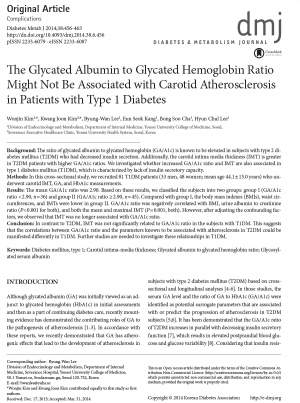
In contrast to Type 2 Diabetes (T2DM), intima-media thickness (IMT) is not significantly related to the GA/A1c ratio in the subjects with Type 1 Diabetes (T1DM). This suggests that correlations between the GA/A1c ratio and the parameters known to be associated with atherosclerosis in T2DM could manifest differently in T1DM.
The clinical usefulness of glycated albumin in patients with diabetes and chronic kidney disease: Progress and challenges

In patients with diabetes and chronic kidney disease, GA is a better index of glycaemic control than HbA1c because it is not affected by the half-life of red blood cells, iron concentrations and/or erythropoietin therapy, uraemia, etc. As well as indicating the mean plasma glucose concentration, GA also reflects postprandial plasma glucose and glycaemic excursions, which are closely associated with diabetic complications such as cardiovascular disease.