



Diabetic Retinopathy
Diabetic retinopathy is a medical condition in which damage occurs to the retina due to T2DM.
• Diabetic retinopathy (DR) is a major microvascular complication in type 2 diabetes. The prevalence of DR increases with duration of diabetes.
• Higher GA levels are significantly correlated with the presence of diabetic retinopathy. As such, GA levels in addition to HbA1c is beneficial as a marker for retinopathy, especially in patients with moderate glycemic control.
• Glycated Albumin can predict the Diabetic Retinopathy progression in patients with type 2 diabetes. GA is a useful marker of glycemic control in presence of Diabetic Retinopathy.

Displaying items by tag: diabetes
Associations of Glycated Albumin and HbA1c with Chronic Kidney Disease in US Adults
The objectives of this study were to compare the associations of glycated albumin and HbA1c with CKD and to investigate whether glycated albumin was associated with CKD above and beyond HbA1c in a nationally representative sample of US adults with and without diabetes.
The study showed that the associations of HbA1c and glycated albumin with CKD are similar in magnitude and results are consistent by race/ethnicity.
The findings are consistent with a growing literature that suggests that glycated albumin may provide similar or complementary prognostic information to HbA1c.
In conclusion, the results support glycated albumin as a useful biomarker of hyperglycaemia.
Executive Summary: Guidelines and Recommendations for Laboratory Analysis in the Diagnosis and Management of Diabetes Mellitus

The American Diabetes Association and American Association for Clinical Chemistry recommend the Glycated Albumin as Good Practice Point (GPP) in clinical settings where patients show variants of haemoglobin, red cells anomalies and factors that are limiting the use of HbA1c.
The guidelines, for the first time, give a clear recommendation and a valid alternative to the HbA1c evaluation.
This is a turning point in the management of patients affected by thalassemia, hemoglobinopathies or pathologies related to the altered erythrocyte turnover.
Laboratory Reporting and clinical interpretation of Glycated Albumin
Laboratory reporting for an appropriate clinical interpretation of Glycated Albumin results requires different comparators according to the specific scenario.
The laboratory report for diagnosis and prognostication should include the appropriate reference interval and optimal cut-points. For patient monitoring, the laboratory report should include the Reference Change Value (RCV), it assures a better clinical information in comparison to reference interval and decision limits.
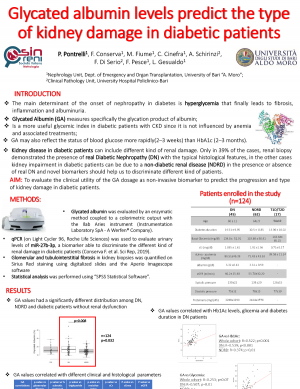
POSTER Euromedlab/WorldLab 2023: Glycated albumin levels predict the type of kidney damage in diabetic patients
ADA – American Diabetes Association: Hemoglobin A1c – Using Epidemiology to Guide Medical Practice: Kelly West Award Lecture 2020
The review highlighted the benefits of HbA1c for the diagnosis and management of diabetes. But he also presented potential alternatives to HbA1c . The study provided insight into the GA results in relation to HbA1c and fructosamine equivalent values.
Elevated glycated albumin in serum is associated with adverse cardiac outcomes in patients with acute coronary syndrome who underwent revascularization therapy

The aim of the study is to investigate the predictive value of Glycated Albumin (GA) for intermediated-term outcomes in many diabetic and non-diabetic hospitalized. The study has showed that increased GA levels in the serum are associated adverse cardio-cerebral events (MACCE), in patients with acute coronary syndrome (ACS) after percutaneous coronary intervention (PCI). GA is useful to identify ACS patients who are at an increased risk for future adverse events despite PCI.
Clinical Usefulness of Glycated Albumin in the Diagnosis of Diabetes: Results from an Italian Study.
GA can be used as a screening marker for diagnosis of diabetes in subjects at risk for diabetes.
Glycated Albumin Level during Late Pregnancy as a Predictive Factor for Neonatal Outcomes of Women with Diabetes
GA is useful for predicting outcomes in patients with diabetes and must be maintained at low levels to prevent any complications in infants.
Glycated Albumin is Superior to Hemoglobin A1c for Evaluating the Presence and Severity of Coronary Artery Disease in Type 2 Diabetic Patients
Serum GA level is a better indicator than HbA1c for evaluating the presence and severity of coronary heart disease (CAD) and predicting adverse cardiac events in patients with T2DM.
Glycated Albumin Is a Better Index of Glycaemic Control than Glycated Haemoglobin Values in Haemodialysis Patients with Diabetes: Effect of Anaemia and Erythropoietin Injection

It has been shown that GA more accurately reflects glycaemic control in haemodialysis (HD) patients with diabetes given that the assessment of glycaemic control by HbA1c in these patients tends to underestimate the actual data.







|
|
|
|
|
|
|
|
|